
Short answer
The door doesn't go away just because the room changes purpose. Unless you physically remove it and frame in a solid wall, it's still there, still has springs under tension, and still needs power, clearance, and weatherproofing. A lot of garage conversions go sideways because someone assumed the door becomes a non-issue once there's carpet and a TV in there. It doesn't.
There are really only two honest options
Option 1: Keep the door, keep it working
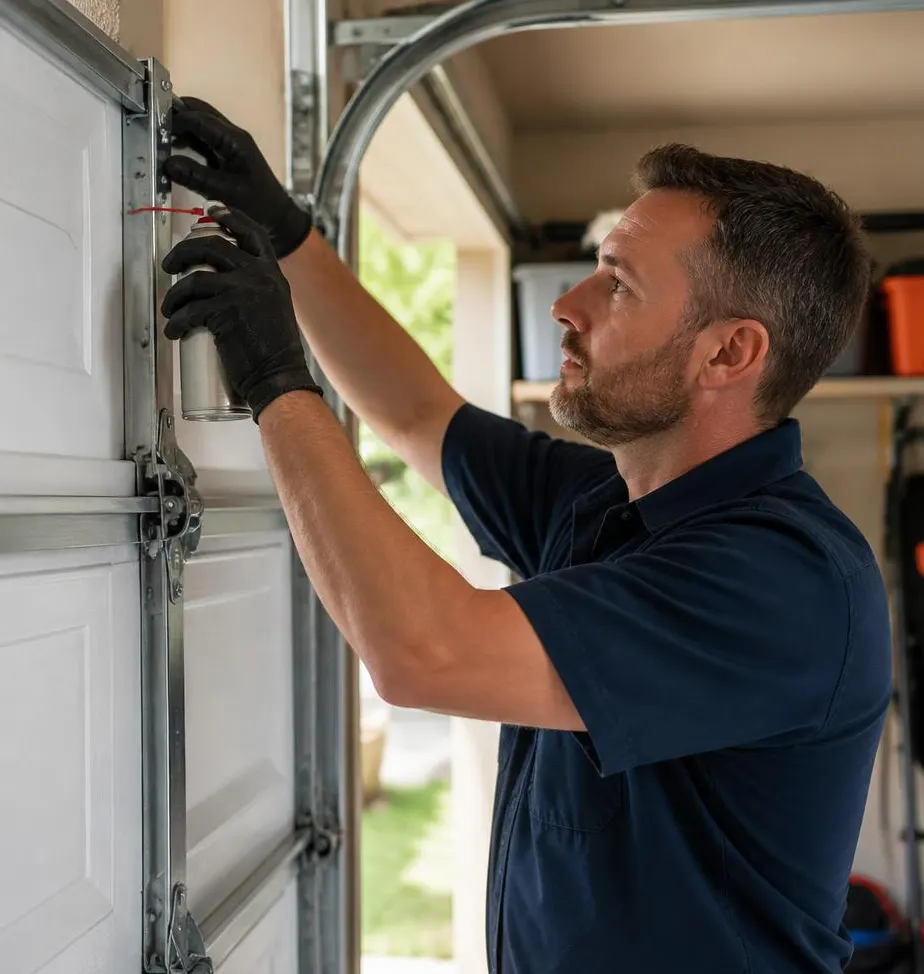
Lots of homeowners leave the door in place and operational, even after finishing the space, because it preserves resale flexibility. A future buyer might want that gym back as a garage. If you go this route, the door still needs annual attention — lubrication, spring balance checks, weatherstripping — even if nobody's parking a car in there anymore. A door that sits mostly closed all winter can actually develop more problems than one used daily, because moving parts that don't move regularly are more prone to seizing up or rusting, especially with the humid summers and salty, freeze-thaw winters this area gets.
Option 2: Remove the door and frame in a wall
This is the permanent route — take out the door, track, and opener, then build an actual wall with a window or exterior door. It's more construction work upfront, but it solves the insulation and sealing problems for good. Once you go this way, there's no going back without real renovation, so it's worth being sure before committing.
What changes once you finish the room
A standard garage door, especially the older, single-layer steel doors common in this area's older housing stock, was never built to be a wall of a heated, finished room. It has minimal insulation value and plenty of small gaps. Once you add drywall, flooring, and a space heater or window AC unit, you'll likely notice:
- Cold transfer in winter — even a well-sealed door loses heat fast compared to a framed wall, so a home gym or office behind one can feel chilly no matter how high the thermostat goes.
- Condensation — humid summer air meeting a cooler door surface (or vice versa in winter) can lead to moisture on the inside, which is a real problem if there's drywall, exercise equipment, or tools nearby.
- Drafts along the bottom seal — door bottoms wear out from salt, sand, and freeze-thaw cycling, and a worn seal that was a minor nuisance for a storage garage becomes a real comfort and moisture issue in a finished room.
If the plan is a workshop, add one more consideration: ventilation and exhaust. A finished space is a sealed space, so fumes from machinery, stains, or finishes need an actual plan, not just the door cracked open.
The parts people forget about
Even if the door is staying for the long haul, a few things get overlooked during a conversion:
- The opener — if it's staying connected, it still needs power and clearance above the door for the track. Don't let a contractor box in that space during framing.
- The springs — torsion and extension springs degrade with age and humidity whether the door is used ten times a day or ten times a year. A door that's rarely opened can still have a spring fail suddenly and dangerously.
- Weatherstripping and bottom seals — these are cheap to replace and make the biggest difference in how livable the finished space feels, especially heading into another snowy, icy Seacoast winter.
When to call Exeter Garage Door
Before you finish the space, it's worth having someone look at the door's actual condition — balance, spring wear, seal quality — so you know what you're working with. If you're keeping the door operational, our Maintenance & Tune-Ups service catches the small issues (worn seals, out-of-balance springs, opener wear) before they turn into a safety problem in a room you now use every day. If you're removing the door for good, we can handle the Garage Door Installation or removal work and leave the opening ready for your contractor to frame.
If you're weighing a garage conversion anywhere from Exeter to Stratham, Epping, or the surrounding Seacoast towns, call Exeter Garage Door first — we'll tell you honestly what the door needs before you build around it.